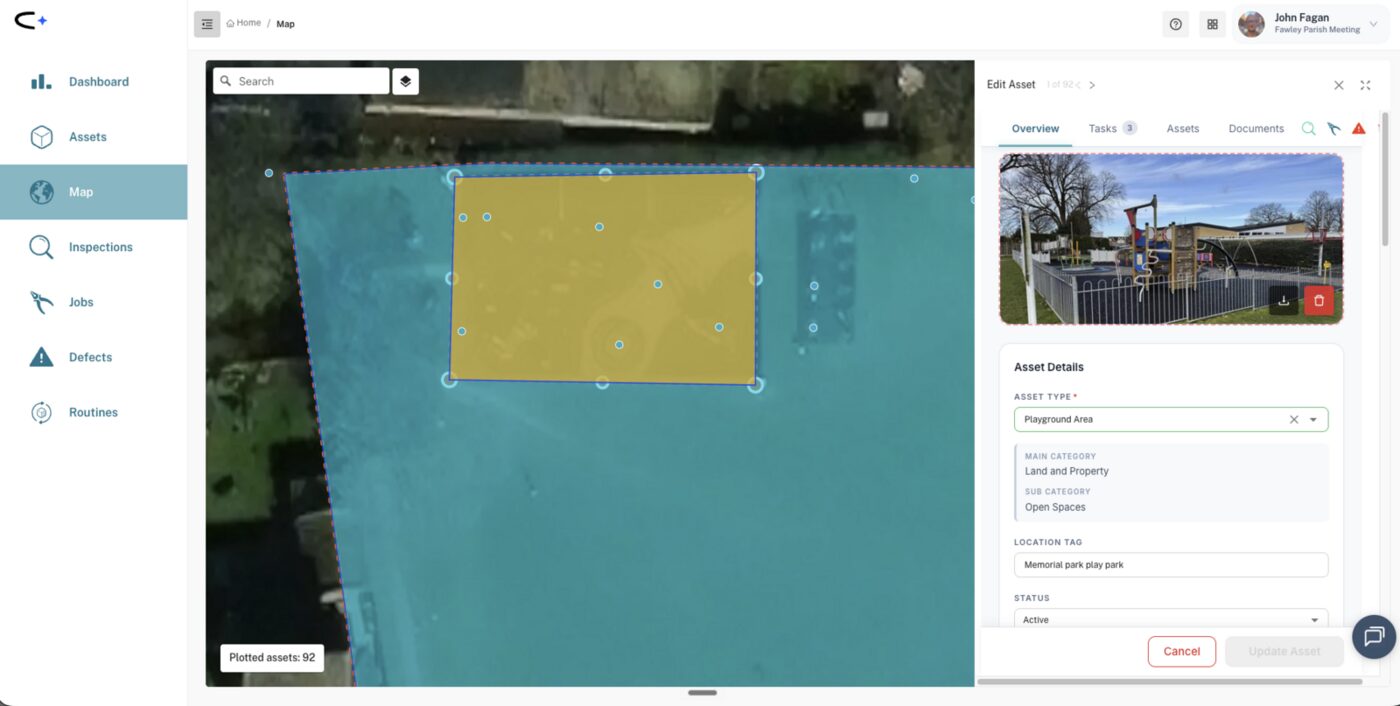
draw each park (and each playground inside it) as an area on the map and give it a location tag. Make sure the assets inside (play equipment, benches, bins, gates) are captured with their pins inside the area so they inherit the tag. That one piece of setup is what makes every option below work.
Parks are where inspection regimes matter most. Play equipment carries real safety risk, insurers often set explicit terms, and if anything goes wrong you will want dated, photographed evidence of your checks. There is no single right way to inspect a park in Civic.ly. This guide applies the options in Choosing How to Inspect to parks and playgrounds, with the real checklists for each. The trade-off is always the same: speed on the round against the strength of your evidence if something goes wrong.
A whole park in one task
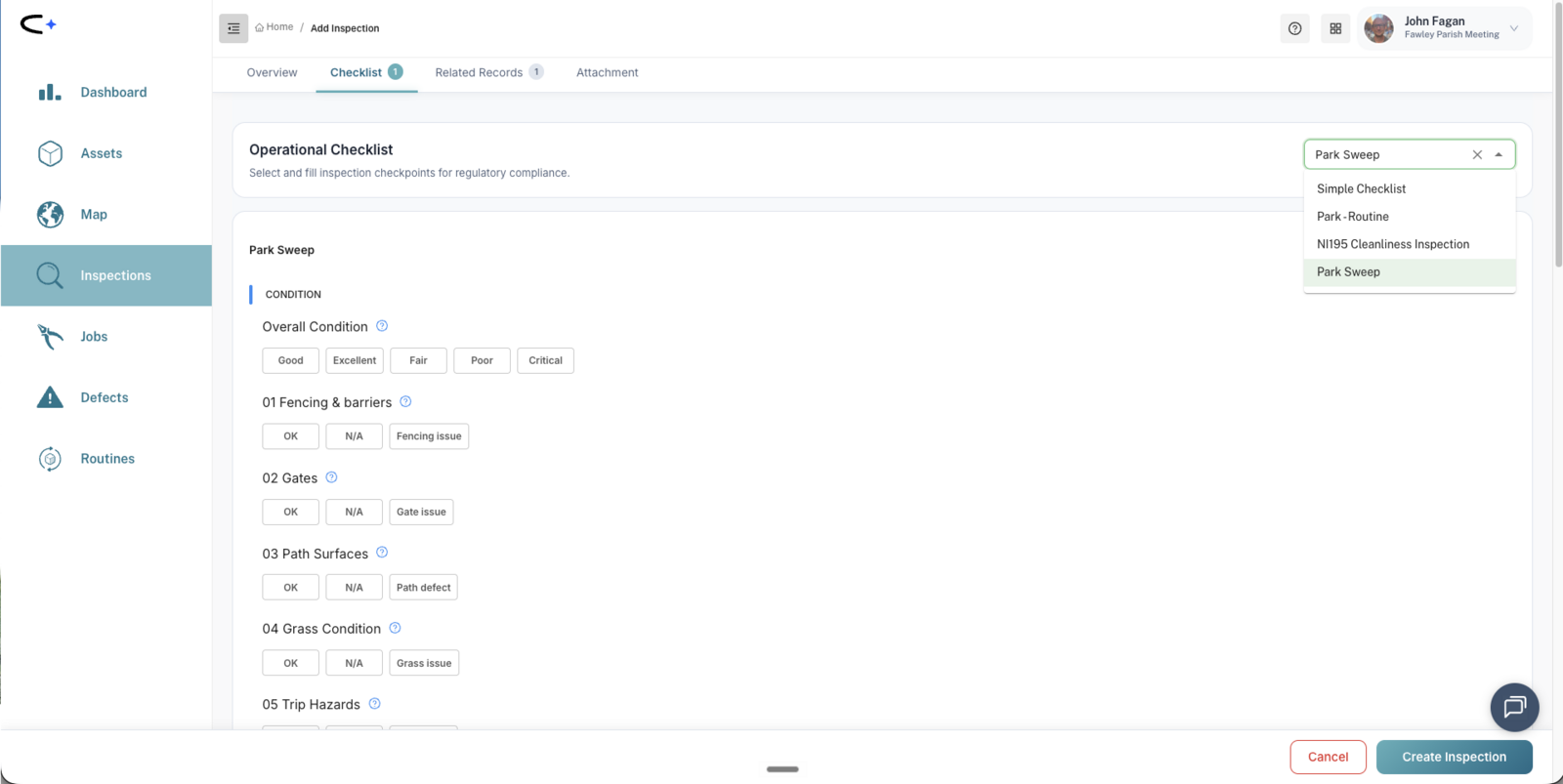
Create one recurring inspection on the park area itself, using the Park Sweep: 24 items covering the whole walk-round in order.
Park Sweep (excerpt): 01 Fencing & barriers · 02 Gates · 03 Path surfaces · 04 Grass condition · 05 Trip hazards · 06 Slip hazards · 07 Drainage · 08 Overhead hazards · 09 Litter · 10 Dog fouling … 13 Play & fitness equipment · 14 Safety surfacing · 15 Benches & seating · 16 Bins · 19 Graffiti & vandalism. Each is answered OK / N/A / a named fault ("Gate issue", "Path defect"), plus an overall condition rating.
There is a sweep for each kind of open space: Playground Area Sweep, Cemetery Sweep, Allotment Sweep, Car Park Sweep. Pick the one that matches the site, and put the Playground Area Sweep on the playground area rather than the whole park.
Pros: fastest to set up, one task per visit, very easy to train. For a general condition round it is often all you need.
Cons: the evidence is at site level. You can prove the park was inspected, not that a particular slide was. A defect started from a failing sweep item attaches to the park, not the slide, unless you raise it on the slide yourself. And a single sign-off for the whole site makes it easier to skip items. One town council rejected sweeps for exactly this reason: "if you've got to check each item, you've got to go to each item."
A checklist on each item
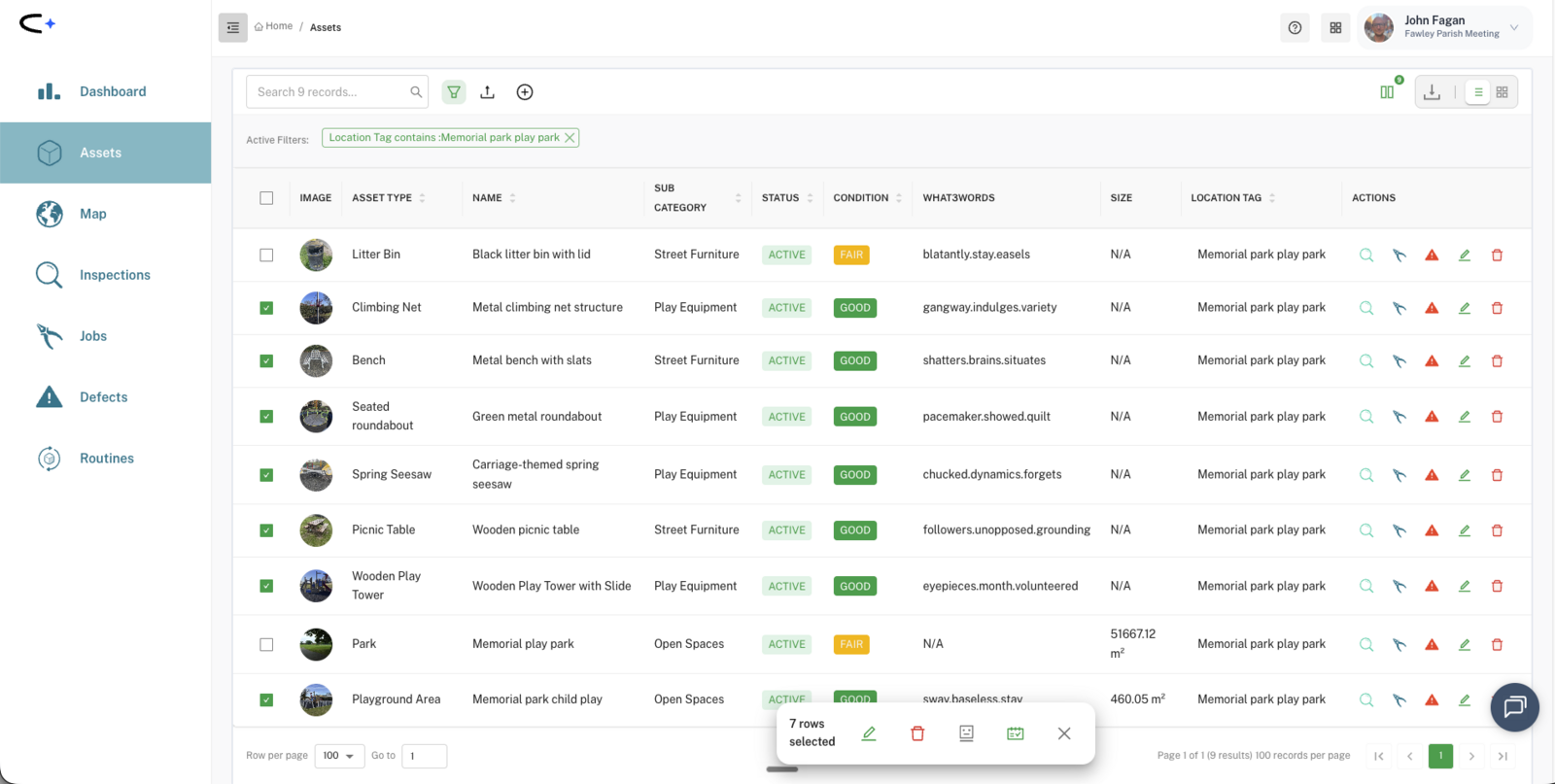
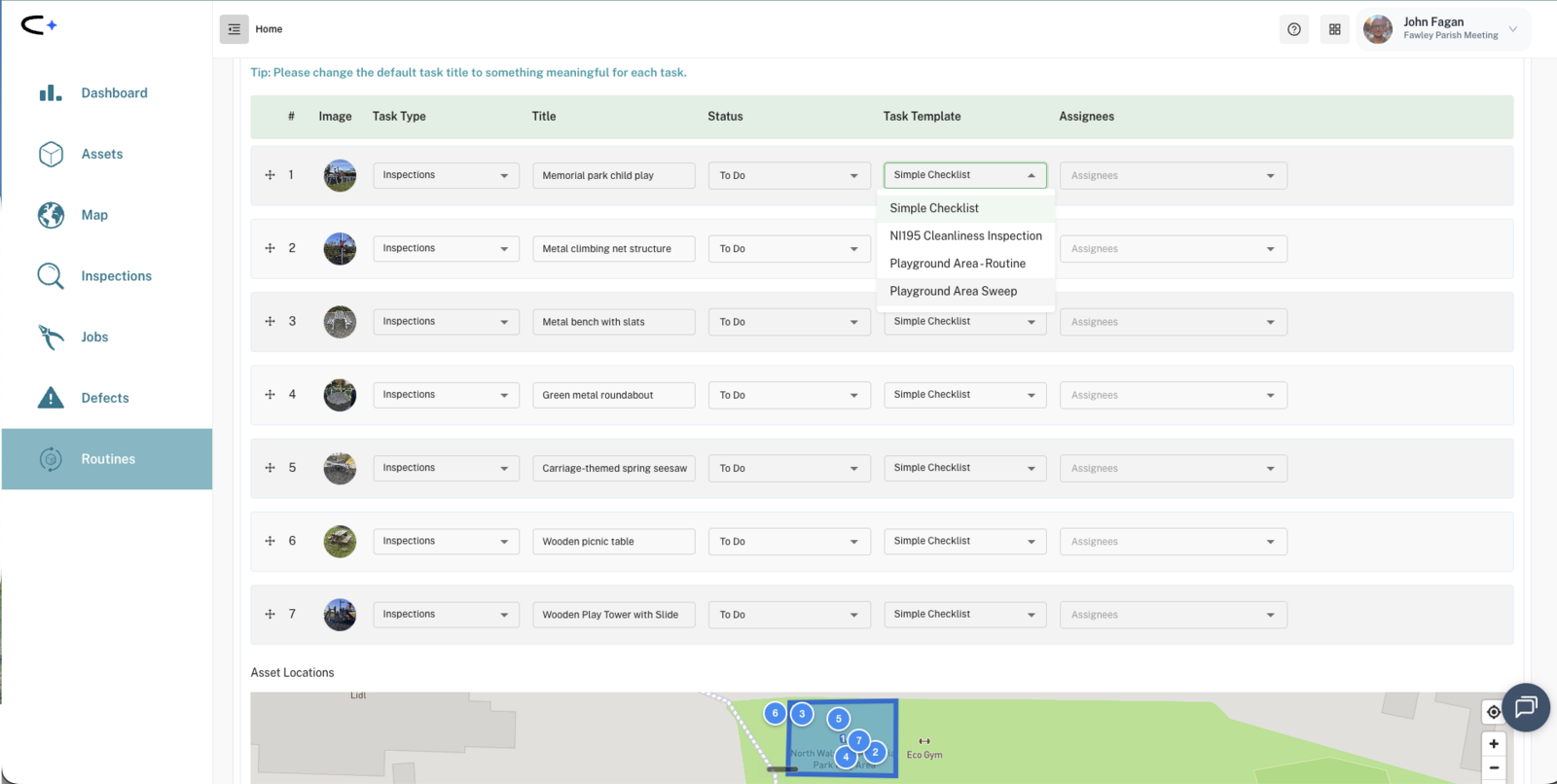
Filter the asset register by the park's location tag to see everything in it, then multi-select the assets and create a routine, so the park generates one batch of per-item inspections each cycle. Play equipment has three checklist levels to choose from:
| Level | What it is | Examples |
|---|---|---|
| Simple Checklist | Four broad questions: condition, cleanliness, functionality, safety | The same four questions on every item |
| Play Check | A handful of graded questions written for that equipment type | Swing Check, Slide Check, Climbing Frame Check, Roundabout Check, Multi Play Unit Check, Outdoor Gym Check, Basic Play Check for anything else |
| Operational Check | One question per component, answered OK, N/A or a named fault | Operational Swing Check, Operational Slide Check, Operational Cableway Check (zip wires) and nine more |
The Simple Checklist is easiest to train, and because every item answers the same questions you get comparable reporting across the estate. A play Check gives richer evidence and suits a weekly round. An Operational Check goes component by component (fixings, bearings, chains, foundations, surfacing depth, clearances, entrapment) and matches the operational inspection in BS EN 1176-7, with a recommended quarterly cadence. Choose a level per type of equipment rather than one for everything.
Pros: item-level, dated, photographed evidence per asset, which is the strongest position for insurance and RoSPA-style traceability. Each item has its own record, so a skipped item shows.
Cons: more tasks per visit and more setup. A big park can be twenty inspections instead of one.
Negative reporting on the low-risk items
Benches, bins, gates and signs rarely need a checklist filled in every week. Attach a checklist to their inspections anyway, and let the inspector swipe right on the mobile app to pass each one in a single gesture. Swipe left marks it failed and pops the checklist up, so a broken bench still gets a full record of what failed. Swiping works on the medium card size, not the large cards. See Working in the Field.
If you would rather not attach a checklist at all, the inspector can simply mark each task passed or failed. That is a genuine dated record that the check happened, but not of what was looked at.
Mixing them: where most councils land
Brackenhill Town Council runs one recreation ground (play area, outdoor gym, five benches, three bins, a MUGA) like this:
- Weekly: a Playground Area Sweep on the drawn play area, plus a Park Sweep on the wider park for paths, grass, fencing and litter.
- Quarterly: an Operational Check on the zip wire and the multi-play unit, the items where liability concentrates.
- Weekly, negative reporting: the benches and bins, swiped right unless something is wrong.
- Annually: the external RoSPA inspection, recorded against the play equipment (see below).
Each is simply a separate recurring inspection, usually set up as a routine. Name them clearly so the team knows which is which. A staged version also works: start everyone on sweeps to build the habit, then add per-item checks on the high-risk equipment as the team gets comfortable. See How to Create a Routine.
The annual inspection sits on top
Your weekly regime does not replace the annual independent play inspection. Record that as a one-off inspection on each asset it covers, set to repeat yearly, and add each item in the report as a defect or job on the specific asset.
Where the defect goes
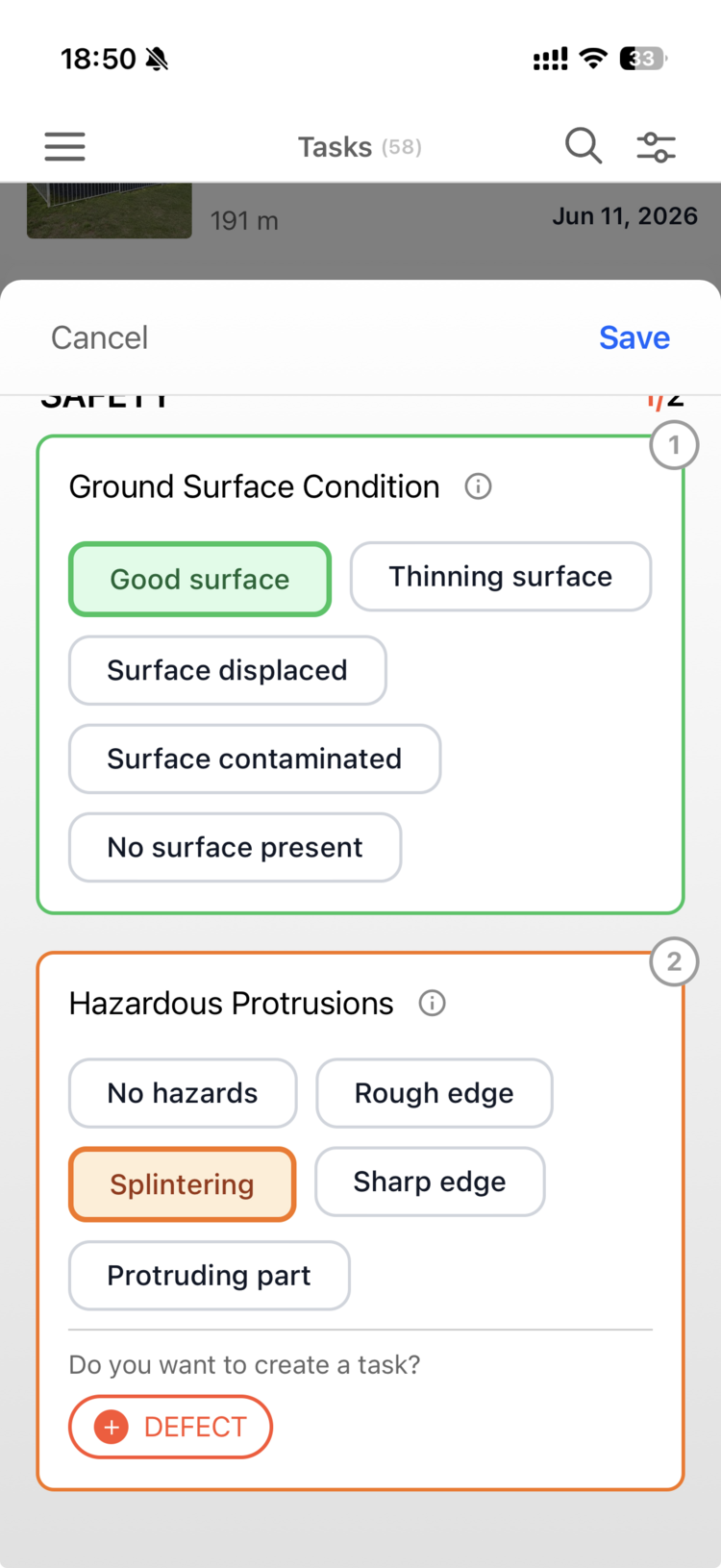
When a checklist answer fails, the app offers to raise a defect and pre-fills the title with the asset and the fault. You choose whether to create it. Raise it on the specific item, with a photo, so the asset builds its own history. That history is what justifies repairs and replacements to your council later.
How to choose
- Check your insurance terms first. Some policies require weekly checks of play and fitness equipment, provably and item by item. If yours does, a whole-park sweep alone will not satisfy it.
- Put the detail where the risk is. A zip wire or a multi-play unit may justify an Operational Check. Benches and bins rarely need more than negative reporting.
- Be honest about your team. Diligent team, simple estate: sweeps may be fine. If you already suspect box-ticking, per-item records help.
Common questions
Q: Can I run both a sweep and per-item checks on the same park? A: Yes, and it is common. They are separate recurring inspections; keep the naming clear so the team knows which is which.
Q: Do the weekly checks replace our annual independent inspection? A: No. The annual (for example RoSPA) inspection is done by an external specialist. Your weekly and quarterly checks are the operational layer in between, and the annual report's action items become defects and jobs against the specific assets.
Q: What is the difference between a Swing Check and an Operational Swing Check? A: The Swing Check is a quick graded look suited to a weekly round. The Operational Swing Check asks one question per component and is designed to run quarterly, in line with BS EN 1176-7.
Q: We don't own the play equipment. The district or borough does. A: Add the assets and log defects anyway. You will build a dated, evidenced record of what you reported to the owning authority, which is a far stronger position than emails when you need them to act.